


SCOTTISH BIRTH RECORDS – HOW TO FIND BIRTH CERTIFICATES AND BAPTISM RECORDS IN SCOTLAND
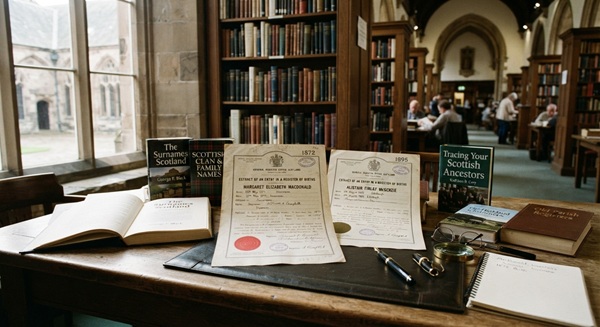
INTRODUCTION TO SCOTTISH BIRTH RECORDS AND GENEALOGY RESEARCH
Finding the birth records of Scottish ancestors is one of the most important steps in researching your Scottish family history. Whether you are tracing your family tree back to the 19th century or investigating ancestors who lived in Scotland hundreds of years ago, historical birth and baptism records can provide valuable information about your family's origins.
Scotland has a particularly valuable collection of historical genealogical records, including civil birth registrations, church baptism registers, Old Parish Registers, Catholic parish records and other historical documents.
These records can help establish:
- The full name of an ancestor.
- The date and location of their birth or baptism.
- The names of their parents.
- Their mother's maiden name.
- Their father's occupation.
- The family's place of residence.
- The parish or religious denomination associated with the family.
- Information that can help identify previous generations of your Scottish ancestors.
One important distinction when researching Scottish ancestry is that Scotland did not introduce compulsory civil registration of births until 1 January 1855. Consequently, the records available to genealogists depend largely on when and where an ancestor was born.
For births from 1855 onwards, researchers can generally search official statutory birth registers. For births before 1855, the principal sources are church baptism registers and historical parish records.
The most important online resource for Scottish birth and genealogy research is Scotland's People , the official Scottish genealogy website operated by the National Records of Scotland.
1. SCOTTISH BIRTH RECORDS FROM 1855 ONWARDS - STATUTORY BIRTH REGISTERS
Scotland introduced compulsory civil registration of births, marriages and deaths on 1 January 1855. This system was established to ensure that births throughout Scotland were officially recorded, regardless of the religious denomination of the child's parents.
These records are known as the Statutory Registers of Births and are among the most valuable sources available to anyone researching Scottish family history.
Unlike many older church baptism registers, Scottish statutory birth records contain a considerable amount of genealogical information.
What information can be found on a Scottish birth certificate?
A typical Scottish statutory birth entry contains:
- Child's full name and surname.
- Date of birth.
- Place of birth, including the address or locality.
- Time of birth.
- Sex of the child.
- Father's full name and occupation.
- Mother's full name, including her maiden surname.
- Date and place of the parents' marriage.
- Name and address of the person reporting the birth.
- Relationship of the informant to the child.
- Registration date and registration district.
One particularly useful feature of Scottish birth certificates is that the time of birth was recorded for all births, not just twins or multiple births.
The 1855 register entries are especially interesting because they also included additional information about the parents, including their ages and birthplaces, and details of their other children.
This can make an original 1855 birth entry an exceptionally useful genealogical document.
Where to search Scottish statutory birth records
The principal online resource is Scotland's People.
Scotland's People – Official Scottish Birth Records Database
https://www.scotlandspeople.gov.uk
Search Scottish Birth, Marriage and Death Records
Guide to Scottish Statutory Birth Registers
Scotland's People provides access to searchable indexes and digital images of historical Scottish birth registrations.
Researchers can search using information such as:
- First name and surname.
- Approximate year of birth.
- County or city.
- Registration district.
- Gender.
The search results can help identify a possible birth registration. Once the correct entry has been identified, researchers can access the available digital record image or obtain an official certificate where appropriate.
Important: Scotland's People restricts online access to birth record images for privacy reasons. Birth images are generally available for records more than 100 years old. More recent records may be searchable in limited ways, but obtaining an official certificate is subject to the applicable registration and access requirements.
The official birth records guide provides further information:
Scottish Statutory Registers – Research Guide
Understanding Scottish birth registration dates
When searching for an ancestor, remember that the Scottish birth indexes are organised by the year in which the birth was registered, rather than necessarily the actual year in which the child was born.
For example, a child born in December 1880 might not have been registered until January 1881.
If you cannot locate a birth record in the expected year, try searching:
- One year before the estimated birth date.
- One year after the estimated birth date.
- A wider range of two or three years.
- Different spellings of the surname or forename.
This is particularly important when researching ancestors whose birth dates have been estimated from census records, marriage certificates or family information.
Searching for Scottish births by mother's maiden name
Mother's maiden names are particularly valuable when researching Scottish ancestors.
Scottish statutory birth indexes include the mother's maiden name from 1929 onwards, with some earlier entries also containing this information.
This can help researchers distinguish between individuals with similar names and identify possible siblings born to the same parents.
2. SCOTTISH BIRTH RECORDS BEFORE - OLD PARISH REGISTERS
If your Scottish ancestor was born before 1855, you will need to investigate historical church records rather than relying exclusively on civil birth certificates.
Before compulsory civil registration was introduced, Church of Scotland ministers and parish clerks were primarily responsible for recording baptisms, marriages and burials.
These historical documents are generally referred to as Old Parish Registers (OPRs)
The surviving Old Parish Registers date back as far as 1553, although the earliest surviving records are relatively limited.
They are one of the most important resources for tracing Scottish ancestry before the middle of the 19th century.
What information is contained in Old Parish Registers?
Unlike modern birth certificates, historical parish registers generally record baptisms rather than the actual date of birth.
Depending on the parish, year and condition of the original register, an entry may contain:
- Child's name.
- Baptism date.
- Sometimes the actual date of birth.
- Father's name.
- Mother's name, although this is not always included.
- Names of witnesses or baptism sponsors.
- Family residence or farm name.
- Names of grandparents or other relatives in occasional entries.
The amount of information varies considerably between parishes.
Some registers contain detailed descriptions of families and their residences, while others provide only a child's name, father's name and baptism date.
It is therefore important not to assume that every Scottish baptism record will contain the same information.
Where to find Scottish Old Parish Registers online
Scotland's People – Old Parish Registers
Scotland's People Official Website
Search Old Parish Registers and Church Records
National Records of Scotland – Old Parish Registers Guide
The Scotland's People website allows researchers to search surviving Old Parish Register indexes and access available digital images.
The records include:
- Church of Scotland baptism registers.
- Marriage banns and marriage registers.
- Death and burial registers.
- Historical parish records dating from the 16th century onwards.
Approximately 3,500 Old Parish Register volumes have survived, but there are substantial gaps in the historical records.
Some parishes have extensive surviving records, while others have very few surviving documents.
Why Scottish parish records can be difficult to find
There are several reasons why an ancestor's baptism may not appear in the Old Parish Registers.
Incomplete historical records: Not every parish maintained registers consistently. Some records were lost, damaged or destroyed.
Religious denomination: Your ancestor may have belonged to a religious congregation other than the established Church of Scotland.
Delayed baptism: Some children were baptised months or even years after birth.
Different spelling conventions: Names were frequently written phonetically, and spelling was not always standardised.
Geographical changes: Parish boundaries and place names changed over time, which can make it difficult to identify the correct register.
For these reasons, it is advisable to search neighbouring parishes and consider alternative spellings when researching Scottish ancestors.
3. SCOTTISH CATHOLIC BIRTH AND BAPTISM RECORDS
Not all Scottish families belonged to the Church of Scotland.
Many Scottish families were Roman Catholic, particularly in parts of the Highlands, the Western Isles, the north-east of Scotland and areas with strong historic Catholic communities.
If your ancestor belonged to the Roman Catholic Church, you may need to search Catholic baptism registers rather than relying exclusively on the Old Parish Registers.
Scottish Catholic baptism records can contain valuable information, including:
- Child's name.
- Date of baptism.
- Parents' names.
- Mother's maiden name in some entries.
- Names of godparents.
- Name of the officiating priest.
- Parish or mission where the baptism took place.
Some Catholic registers also contain Latin entries, so researchers may encounter Latin versions of familiar Scottish names.
Where to find Scottish Catholic baptism records
Scotland's People
Search the church registers section for available Catholic records.
Scottish Catholic Archives
The Scottish Catholic Archives is an important source for historical records relating to the Roman Catholic Church in Scotland.
National Records of Scotland
The National Records of Scotland provides information about historical Scottish church registers and the availability of records from different religious denominations.
When searching Catholic records, it is worth identifying the actual parish or mission associated with your ancestor. Catholic records may not always be included in the same collections as the Church of Scotland Old Parish Registers.
4. FAMILYSEARCH - FREE SCOTTISH BIRTH AND BAPTISM RECORDS
Another excellent resource for researching Scottish birth records is FamilySearch.
FamilySearch is a genealogy research service operated by The Church of Jesus Christ of Latter-day Saints. It provides access to millions of historical genealogical records from countries around the world, including Scotland.
Many of its Scottish collections can be searched free of charge, although some records or images may have access restrictions.
Scottish birth and baptism collections available through FamilySearch
The following collections are particularly useful:
Scotland Births and Baptisms, 1564–1950
Search Scotland Births and Baptisms, 1564–1950
This collection contains millions of indexed Scottish birth and baptism entries. Depending on the record, information may include the child's name, baptism date, parents' names and place of baptism.
Scotland, Church Records and Kirk Session Records, 1658–1919
Search Scotland Church and Kirk Session Records
This collection includes historical Church of Scotland records, kirk session material and records associated with different Presbyterian congregations.
Scotland, Presbyterian and Protestant Church Records, 1736–1990
Search Presbyterian and Protestant Church Records
This collection provides another opportunity to find baptism records for Scottish ancestors who belonged to Presbyterian and other Protestant denominations.
Scotland, Lanarkshire Church Records, 1823–1967
Search Lanarkshire Church Records
This collection is particularly useful for researchers investigating families from Glasgow, Lanarkshire and surrounding communities. It includes records from several non-Church of Scotland congregations.
How to search FamilySearch for Scottish ancestors
To begin researching:
- Visit the FamilySearch website.
- Select the Search option and choose Records.
- Enter your ancestor's first name and surname.
- Select Scotland as the birthplace or event location.
- Enter an estimated birth or baptism year.
- Narrow the search by county or parish if known.
- Examine the search results for possible matches.
- Review the original document image when available.
An important advantage of FamilySearch is that it may provide access to records and indexes that are useful for identifying ancestors before searching the original registers on Scotland's People.
We recommend using FamilySearch alongside Scotland's People rather than relying on either website exclusively.
For additional guidance, visit:
FamilySearch – Scotland Genealogy Research Guide
5. NATIONAL RECORDS OF SCOTLAND - OFFICIAL HISTORICAL BIRTH RECORDS
The National Records of Scotland (NRS) is the official government organisation responsible for preserving Scotland's national archives and many of its most important historical records.
The National Records of Scotland holds a wealth of information for genealogists, including statutory birth registers, Old Parish Registers, church records and historical documents relating to Scottish families.
Although many genealogical records can be searched online through Scotland's People, the National Records of Scotland website provides valuable research guides explaining the history, contents and availability of the original records.
Important National Records of Scotland research guides
- Birth, Death and Marriage Records – An overview of Scotland's historical civil registration system and earlier church records.
- Statutory Registers of Births, Deaths and Marriages – Details about the records introduced in 1855.
- Old Parish Registers – Historical baptism and parish register information.
- Family History Research Guide – An introduction to researching Scottish ancestors.
Visiting the Scotland's People Centre in Edinburgh
For researchers who are able to travel to Scotland, the Scotland's People Centre in Edinburgh provides access to historical genealogical records and research facilities.
Important National Records of Scotland research guides
- Original statutory birth registers.
- Old Parish Registers.
- Historical church records.
- Scottish census returns.
- Wills and testaments.
- Other documents that may not be available through ordinary online searches.
The centre is an important destination for anyone undertaking detailed Scottish family history research.
6. FINDING THE CORRECT SCOTTISH PARISH, COUNTY AND REGISTRATION DISTRICT
One of the biggest challenges in Scottish genealogy research is identifying the correct parish or registration district where an ancestor was born.
Knowing the general area of Scotland is helpful, but finding the precise parish can make a considerable difference when searching historical baptism registers.
For example, an ancestor described in family records as being born in Glasgow may have been born in a neighbouring parish or in a district that later became part of the modern city.
Similarly, historical Scottish counties, parishes and registration districts have changed over time.
Why historical Scottish geography matters
When searching for Scottish birth records, researchers should try to establish:
- The historical county in which the family lived.
- The civil parish associated with the place of birth.
- The Church of Scotland parish.
- The statutory registration district, for births from 1855 onwards.
- The nearest town, village or settlement.
This is particularly important for rural families, where a historical birth record might identify a farm, estate or small settlement rather than a modern town.
Useful Scottish maps and geographical research websites
National Library of Scotland – Historical Maps
National Library of Scotland Historical Maps
The National Library of Scotland provides access to an extensive collection of digitised historical maps.
These maps can help identify:
- Historical parish boundaries.
- Old towns and villages.
- Farms and rural settlements.
- Historical place names.
- Changes in local geography.
- Locations of churches and other historical buildings.
National Library of Scotland – Maps and Family History
Maps for Scottish Family History Research
Scotland's People – Search by Place
Scottish Historical Place Name Search
This resource allows researchers to investigate historical Scottish administrative areas and place names.
Historic Environment Scotland – Trove
Trove – Scotland's Historic Environment and Archives
Trove provides access to historical material from Historic Environment Scotland.
Research note: The former ScotlandsPlaces website was retired in June 2025. Its historical resources have been redirected to the relevant contributing organisations, including Scotland's People, the National Library of Scotland and Trove.
7. OTHER SCOTTISH GENEALOGY RESOURCES FOR FINDING BIRTH RECORDS
In addition to the main official record collections, several other online resources can help researchers locate Scottish birth and baptism information.
These websites can be especially useful when an ancestor cannot be found in the standard civil registration or parish register indexes.
Scottish Indexes
https://www.scottishindexes.com
Scottish Indexes is an independent Scottish genealogy resource providing access to a variety of historical records and indexes.
Its collections include records that can complement the main Scotland's People databases, including kirk session and other historical church material.
It is worth exploring when researching ancestors whose births, baptisms or family circumstances are difficult to establish.
Findmypast
Findmypast is a subscription genealogy website with access to historical British and Scottish records.
Its Scottish collections include selected:
- Birth and baptism indexes.
- Church records.
- Census records.
- Historical directories.
- Newspaper collections.
Its records can provide another avenue for locating Scottish ancestors, particularly when searching for alternative spellings or additional family information.
Ancestry
Ancestry is another major genealogy research platform with Scottish historical records.
Researchers may find:
- Scottish birth and baptism indexes.
- Census records.
- Family trees submitted by other researchers.
- Historical newspaper references.
- Passenger and immigration records.
- Scottish family history collections.
Family trees submitted by other researchers should be treated as research clues rather than verified evidence. Always try to establish the information using original historical documents.
National Library of Scotland
National Library of Scotland – Family History Resources
The National Library of Scotland provides access to historical publications, maps, newspapers, directories and other resources that can help identify the origins and circumstances of Scottish ancestors.
Scottish Records Society
The Scottish Records Society publishes historical documents and transcriptions relating to Scotland.
Its publications can be particularly useful for researchers investigating earlier Scottish families and historical records that may not be available through conventional genealogy databases.
8. WHAT TO DO IF YOU CANNOT FIND A SCOTTISH BIRTH RECORD
Not every Scottish birth or baptism will appear in an online genealogy database.
There are several reasons why a record may be missing, and it is important to explore alternative research methods before concluding that a record does not exist.
Search alternative surname spellings
Historical Scottish records frequently contain variations in spelling.
For example:
- MacDonald, McDonald and M'Donald.
- Stewart and Stuart.
- Thomson and Thompson.
- MacKenzie and Mackenzie.
Some names were written phonetically, and spelling could vary between different documents.
Try searching with fewer letters or using surname variations.
Search neighbouring parishes
Your ancestor may have been baptised in a neighbouring parish rather than the parish where the family lived.
This could happen because:
- The nearest church was located in another parish.
- The family moved between communities.
- The parents belonged to a different congregation.
- The baptism took place in the mother's home parish.
If a search produces no results, expand your investigation to neighbouring parishes.
Investigate non-conformist religious records
Not all Scottish families attended the established Church of Scotland.
Your ancestors may have belonged to:
- The Free Church of Scotland.
- The United Presbyterian Church.
- The Associate Presbyterian Church.
- The Reformed Presbyterian Church.
- The Roman Catholic Church.
- Other Protestant congregations.
These churches sometimes maintained their own registers, which may contain the baptism information you need.
Investigate the Register of Neglected Entries
An unusual but potentially valuable resource is the Scottish Register of Neglected Entries.
This register was established after civil registration began in 1855 and contains certain births, deaths and marriages that occurred between 31 December 1800 and 1 January 1855 but had not been recorded in the Old Parish Registers.
It is not a comprehensive collection, but it can occasionally provide information when a normal parish search proves unsuccessful.
More information is available here:
National Records of Scotland – Register of Neglected Entries
Search other historical documents
If you cannot find an actual birth or baptism entry, other records may provide evidence of an ancestor's approximate birth date and family relationships.
Consider investigating:
- Scottish census returns.
- Marriage certificates.
- Death certificates.
- Wills and testaments.
- Kirk session records.
- School records.
- Newspaper notices.
- Cemetery and monumental inscription records.
A combination of these records can sometimes establish a person's identity and family relationships even when their original baptism record has not survived.
9. USING SCOTTISH CENSUS RECORDS TO CONFIRM BIRTH INFORMATION
Scottish census records are another valuable resource when researching the birthplaces and family relationships of Scottish ancestors.
Although census records are not birth certificates, they can provide information that helps researchers identify the correct birth registration or baptism entry.
Historical Scottish census records are available for the following years:
- 1841
- 1851
- 1861
- 1871
- 1881
- 1891
- 1901
- 1911
- 1921
The census returns can provide:
- Name of each household member.
- Approximate age.
- Place of birth.
- Relationship to the head of household.
- Occupation.
- Marital status.
- Address and place of residence.
By comparing the birthplace and age recorded in successive census returns, researchers can narrow down the possible year and location of an ancestor's birth.
Where to search Scottish census records
- Scotland's People – Official Scottish Census Records
- FamilySearch – Historical Census Records
- Findmypast – Scottish Census Records
- Ancestry – Scottish Census Collections
The National Records of Scotland also provides further guidance on using census records for Scottish family history research.
National Records of Scotland – Family History Guide .
10. SCOTTISH BIRTH RECORDS - A STEP-BY-STEP GENEALOGY RESEARCH GUIDE
If you are beginning your Scottish family history research, the following approach is a useful way to organise your investigation.
Step 1 – Establish what you already know
Start with the information you have about your Scottish ancestor.
-
Try to establish their:
- Full name.
- Approximate year of birth.
- Town, village or county of birth.
- Parents' names, if known.
- Religious denomination, if known.
Even an approximate birthplace and birth year can provide a useful starting point.
Step 2 – Establish whether the birth occurred before or after 1855
-
This is the most important initial step.
- For births from 1855 onwards, search the Scottish statutory birth registers.
- For births before 1855, investigate Old Parish Registers and other church records.
Step 3 – Search Scotland's People
Begin with the official Scottish genealogy database.
Search using your ancestor's name, approximate year of birth and possible registration district or parish.
If you find a possible match, examine the original record image where available.
Step 4 – Search FamilySearch
Repeat your investigation using FamilySearch's Scottish birth and baptism collections.
This may reveal additional indexed entries or alternative spellings.
Step 5 – Investigate the relevant parish
If your ancestor was born before 1855, identify the historical parish where the family lived.
Search the Old Parish Registers and investigate any other churches that operated in the area.
Step 6 – Use census records to verify your findings
Look for your ancestor in the Scottish census returns.
Compare their reported birthplace, age and family relationships against the information found in birth and baptism registers.
Step 7 – Identify the parents and move back another generation
Once you have established the correct birth record, use the names of the parents to continue researching the previous generation.
Scottish birth certificates are particularly valuable because they generally provide both parents' names and the mother's maiden surname.
This information can lead directly to an earlier generation of Scottish ancestors.
11. IMPORTANT TIPS FOR RESEARCHING SCOTTISH BIRTH AND BAPTISM RECORDS
When conducting Scottish genealogy research, keep the following points in mind:
1. Do not confuse birth dates with baptism dates. Older parish registers frequently record the baptism rather than the actual birth.
2. Always check the original document. Transcribed indexes can contain spelling errors or incomplete information.
3. Look for the mother's maiden name. This is one of the most useful pieces of information for identifying Scottish family relationships.
4. Consider religious denominations. A missing Church of Scotland baptism does not necessarily mean that a baptism record does not exist.
5. Investigate neighbouring parishes. Historical parish boundaries may not correspond with modern town or county boundaries.
6. Check census records. Census returns can help confirm an ancestor's age, birthplace and family members.
7. Consider name variations. Scottish surnames and forenames were not always recorded consistently.
8. Keep track of your sources. Record the website, collection, reference number and original document image for every important discovery.
9. Do not assume an indexed result is the correct person. Verify the parents, location and other identifying details before adding an individual to your family tree.
10. Work backwards one generation at a time. Establishing each generation with documentary evidence will help prevent mistakes in your family tree.
12. ESSENTIAL ONLINE RESOURCES FOR SCOTTISH BIRTH RECORDS AND GENEALOGY
The following websites provide some of the most useful online resources for anyone researching Scottish birth records, baptism registers and family history.
For convenience, this list brings together the main research websites mentioned throughout this guide.
Scotland's People – Official Records - scotlandspeople.gov.uk
Scottish Statutory Birth Registers - Birth Register Guide
Old Parish Registers - National Records of Scotland
National Records of Scotland - nrscotland.gov.uk
FamilySearch - familysearch.org
Scottish Catholic Archives - scottishcatholicarchives.org.uk
Scottish Indexes - scottishindexes.com
Findmypast - findmypast.co.uk
Ancestry - ancestry.com
National Library of Scotland - nls.uk
Historical Scottish Maps - maps.nls.uk
Historic Environment Scotland - trove.scot
Scottish Records Society - scottishrecordsociety.org.uk
Some resources offer free searches, while others require registration, subscriptions or payment to view original documents or obtain certificates.
For the most authoritative information, always consult the original records held by the National Records of Scotland or accessed through Scotland's People.
13. CONCLUSION - DISCOVER YOUR SCOTTISH FAMILY HISTORY THROUGH BIRTH RECORDS
Scottish birth records are among the most valuable resources available to family historians researching their Scottish ancestry.
Whether your ancestors were born in Edinburgh, Glasgow, Aberdeen, Inverness, Dundee, the Highlands or a small Scottish village, historical birth and baptism records can help uncover important details about their lives and family origins.
The introduction of compulsory civil registration in 1855 created a detailed system of birth records that provides valuable information about parents, occupations, birthplaces and family relationships.
For earlier generations, Old Parish Registers, Catholic baptism records and other historical church documents offer opportunities to trace Scottish families back into the 18th century and, in some cases, considerably earlier.
By combining these records with census returns, historical maps, church documents and other genealogical resources, it is possible to build a much clearer picture of your Scottish family history.
The best place to begin your research is Scotland's People, supported by the additional genealogy websites and historical archives listed in this guide.
Saltire Cross is dedicated to helping people discover their Scottish heritage and explore the historical records that connect families around the world to their Scottish roots.